What Is Vocal Phrasing? How to Sing With More Emotion and Tell the Story
Aug 21, 2026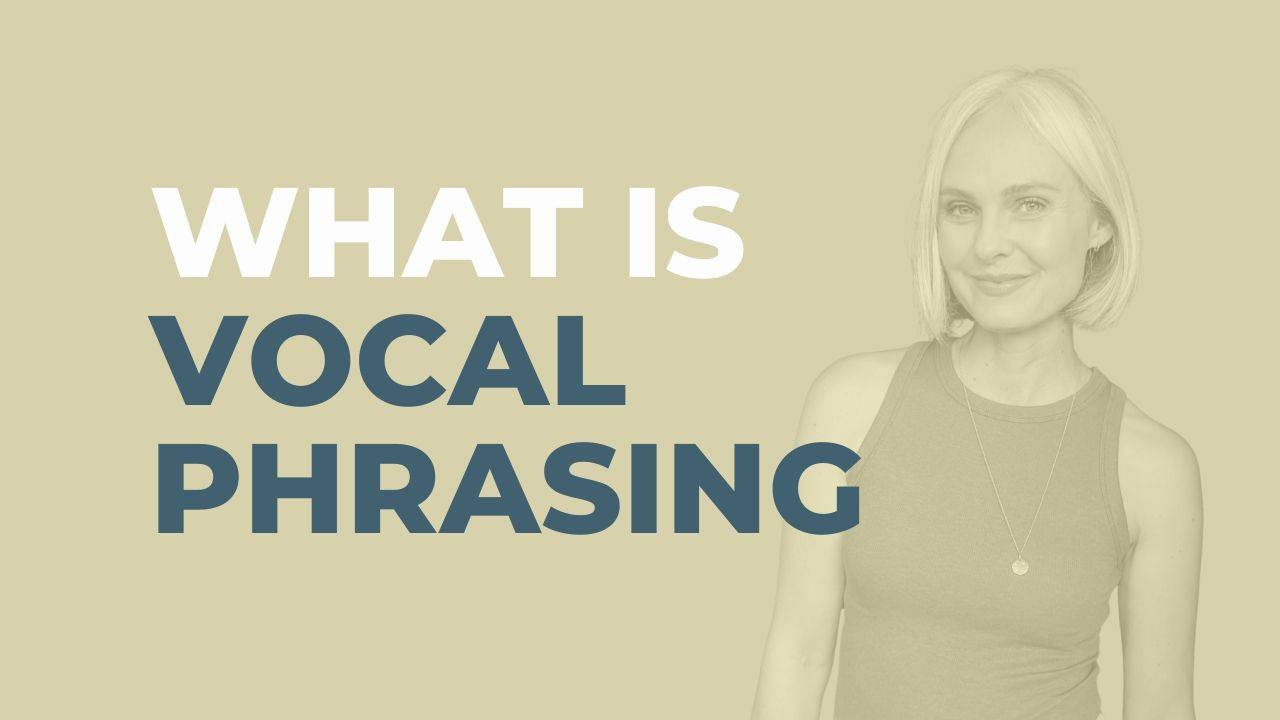
Have you ever listened to a singer and felt completely pulled into the story, even though you couldn’t quite explain why?
It’s often not because they’re singing more notes, singing louder, or doing anything particularly flashy. It’s because of how they’re shaping the phrase.
That’s vocal phrasing.
Phrasing is one of those skills singers sometimes assume is something you either naturally have or you don’t. But just like vocal technique, phrasing can be explored, practiced, and developed.
And when you begin making more intentional choices with your phrasing, a song can go from feeling “learned” to feeling like it actually belongs to you.
What Is Vocal Phrasing?
Vocal phrasing is the way you shape a musical line to communicate the meaning of the lyric.
Think about the way you speak. You probably don’t give every word the same amount of weight. Some words are more important. Some thoughts move quickly, while others need a little more space. Your pitch, volume, pace, and tone naturally change depending on what you’re saying and how you feel about it.
We can bring those same instincts into singing.
Two singers can sing the exact same melody and lyric and make completely different choices about which words they emphasize, where they breathe, how long they hold a note, how softly or strongly they sing, or even the vocal quality they use.
Those choices are part of phrasing.
Technique Gives You More Choices
Good phrasing and good vocal technique aren’t competing with each other.
In fact, technique can give you more freedom to phrase the way you want.
If the only way you can reach a certain note is by pushing, for example, you don’t have many artistic choices available on that note. You may want it to sound intimate, conversational, bright, warm, strong, or vulnerable, but first your voice needs enough coordination and flexibility to give you those options.
That’s one of the reasons I care so much about technique.
The goal isn’t simply to sing the “right” notes. It’s to build a voice that gives you choices, so you can use those choices to communicate something.
4 Ways to Shape a Vocal Phrase
1. Decide Which Words Matter
Not every word in a lyric deserves equal emphasis.
Take a simple sentence like:
“I never said I wanted to leave.”
Try speaking it several times, emphasizing a different word each time.
I never said I wanted to leave.
I never said I wanted to leave.
I never said I wanted to leave.
I never said I wanted to leave.
The meaning changes depending on which word you choose.
Lyrics work the same way.
Before you sing a line, ask yourself:
What is the most important word in this thought?
That one question can immediately change the way you sing it.
2. Play With Timing
You don’t necessarily have to treat every note with exactly the same rhythmic weight.
Depending on the song and style, you might move through one part of a phrase more quickly, linger slightly on an important word, sit back into the rhythm, or give a thought a little more space.
You still want to understand the rhythm of the song. But once you do, subtle choices with timing can make a vocal feel much more conversational and personal.
3. Explore Dynamics and Vocal Color
What happens if you sing the beginning of the phrase more quietly and allow it to grow?
What if one word becomes clearer or stronger?
What if a line that you’ve automatically been singing with a big sound actually works better with something lighter or more intimate?
Your vocal color is part of your storytelling.
And this is another place where technique and artistry meet: the more ways you can use your voice comfortably, the more colors you have available to you.
4. Let Your Breath Be Part of the Thought
We often think about breathing only in terms of having enough air to make it through the phrase.
But where you breathe can affect the story, too.
A breath can separate two thoughts. It can create anticipation. It can give an important lyric a moment to land.
Instead of automatically breathing in the same place every time, ask whether the breath makes sense with what you’re saying.
Try This With a Song You’re Singing
Choose one or two lines from a song you’re working on.
Before you sing them, speak the lyrics out loud like you’re saying them to another person.
Don’t perform them. Just say them.
Notice:
- Which words naturally become important?
- Where do you slow down or speed up?
- Where would you naturally pause or breathe?
- Does your voice get louder, softer, brighter, warmer, or more direct?
- What are you actually trying to get the other person to understand?
Then sing the line again and see how much of that natural expression you can keep.
You can also experiment.
Emphasize a different word. Change the dynamic. Hold something a little longer. Make one version more conversational and another more dramatic.
You don’t have to find the “correct” version right away. Part of developing artistry is becoming willing to try different choices and notice what communicates the lyric most clearly.
Your First Choice Isn’t Always Your Best Choice
One of the biggest traps singers fall into is repeating a phrase exactly the same way every time.
Once we’ve learned a song a certain way, that version can start to feel inevitable.
But it may simply be a habit.
So get curious.
What else could I do here?
What happens if the important word changes? What if you sing less? What if you wait a little longer? What if you let the phrase build instead of starting at full intensity?
Sometimes a very small adjustment is enough to make a lyric suddenly feel much more alive.
Ultimately, great phrasing comes back to a simple question:
What am I trying to say?
Technique helps give you the freedom to make the sound you want. Phrasing helps you decide what you want to do with that freedom.
And that’s where singing starts to become storytelling.
Want more opportunities to work on technique, artistry, and the songs you love?
Inside The Unlimited Voice Studio Membership, we explore topics like phrasing, belting, vocal technique, song interpretation, and more in our live Studio Classes, with replays available if you can’t attend live.
Explore The Unlimited Voice
WAYS TO WORK TOGETHER
Private Voice Coaching
Personalized voice training designed around your voice, your goals, and the songs you want to sing.
Explore Private Coaching →
Studio Membership
Live Studio Classes, replays, vocal exercises, and a supportive community for singers who want to keep learning and growing.
Explore the Studio Membership →
FREE RESOURCES
Cheatsheet for Better Singing →
Free Straw Singing Course →
Join the Newsletter →