Behind the Vocals: Coaching OfflineTV Through a Christmas Album
Sep 22, 2026
Seven mostly inexperienced singers. Two private lessons each. One holiday album to record. Here’s what happened behind the scenes.
What do you do when seven people who mostly don’t consider themselves singers decide to make a Christmas album?
You give them two voice lessons each and send them into a recording studio.
No pressure.
That was essentially the assignment when I was brought in to coach the members of OfflineTV for their holiday album.
It was a very different project from working with a singer over months or years. We had a short runway, real songs to record, and a group of people with wildly different voices, experience levels, and comfort around singing.
So the goal was never to turn anyone into a fully trained singer in two lessons.
It was to figure out what would help each person right now.
Preparing seven very different voices
When I coach a singer, I’m always listening for the same basic thing:
What is getting in the way of the sound they’re trying to make?
But the answer can be completely different from person to person.
One singer may need more space in the mouth. Someone else may be pushing too much air. Another may need to adjust a vowel, release unnecessary tension, change the way they’re approaching a higher note, or simply understand what their body is supposed to be doing.
With the OfflineTV members, we didn’t have time to address every possible aspect of their voices.
We had to prioritize.
What was the biggest obstacle in this song?
What adjustment could make this phrase easier?
What could I give them that they could actually reproduce later, when they were standing in front of a microphone without me beside them?
That’s one of the reasons I love song-based coaching. Vocal exercises are useful, but ultimately they have to lead somewhere.
If an exercise helps you coordinate your voice differently, the next question is:
Can we take that feeling back into the song?
When confidence becomes part of the vocal problem
One of the most interesting parts of the project was seeing how differently everyone responded to being asked to sing.
Sydney talked about this very openly when she later reacted to the finished OfflineTV video.
She described herself as a normally confident person. But singing was different.
“There are some things that make me so not confident, and this is one of them.”
And I remember seeing that lack of confidence physically.
At one point during a lesson, she was standing in a way that seemed to say, I do not want anyone looking at me while I do this.
She later remembered me essentially telling her: stop standing like that. Stand up. You sound good. Everything in your body language is telling me you don’t want to be here.
It wasn’t about pretending to be confident.
It was about recognizing that she was already doing more successfully than she thought she was, while her body was still communicating fear and apology.
Sydney later said:
“The lessons were probably the best part... It was an opportunity to learn a new skill set.”
She also said they were some of the hardest moments of the project.
I actually love that she said both.
Learning something new, especially something as personal as singing, can be incredibly vulnerable. Progress doesn’t always feel like instant confidence.
Sometimes you’re frustrated.
Sometimes you feel awkward.
Sometimes the thing you’re working on exposes an insecurity you didn’t know was there.
The job of a coach isn’t to pretend those feelings don’t exist.
It’s to help you keep working anyway.
Eventually, you have to stop preparing
Then came the recording studio.
Recording brings a completely different kind of pressure.
There’s a microphone in front of you. People are listening through the speakers. The red light is on.
And suddenly every little thing you’ve been working on can feel much harder to trust.
At one point, I told them:
“At a certain point you've just gotta call your preparation complete. We have taken the time that we had and done the best that we can with it, and then you just gotta go in there and trust yourself and enjoy it.”
I still think about that moment because it applies to so many singers.
There will always be something else you could work on.
Another lesson.
Another run-through.
Another technical detail you could try to perfect.
But eventually, preparation has to become performance.
And that doesn’t mean everything is suddenly going to work perfectly.
The other part of what I told them was:
“If something’s not working, we’ll find a way to make it work.”
That was a big part of what I was there to do in the studio.
Maybe we needed to change the way someone approached a phrase. Maybe we needed a small technical adjustment. Maybe they just needed to step away for a minute, reset, and try again.
The goal wasn’t perfection.
It was to prepare them well enough that when something felt difficult, we had somewhere to go.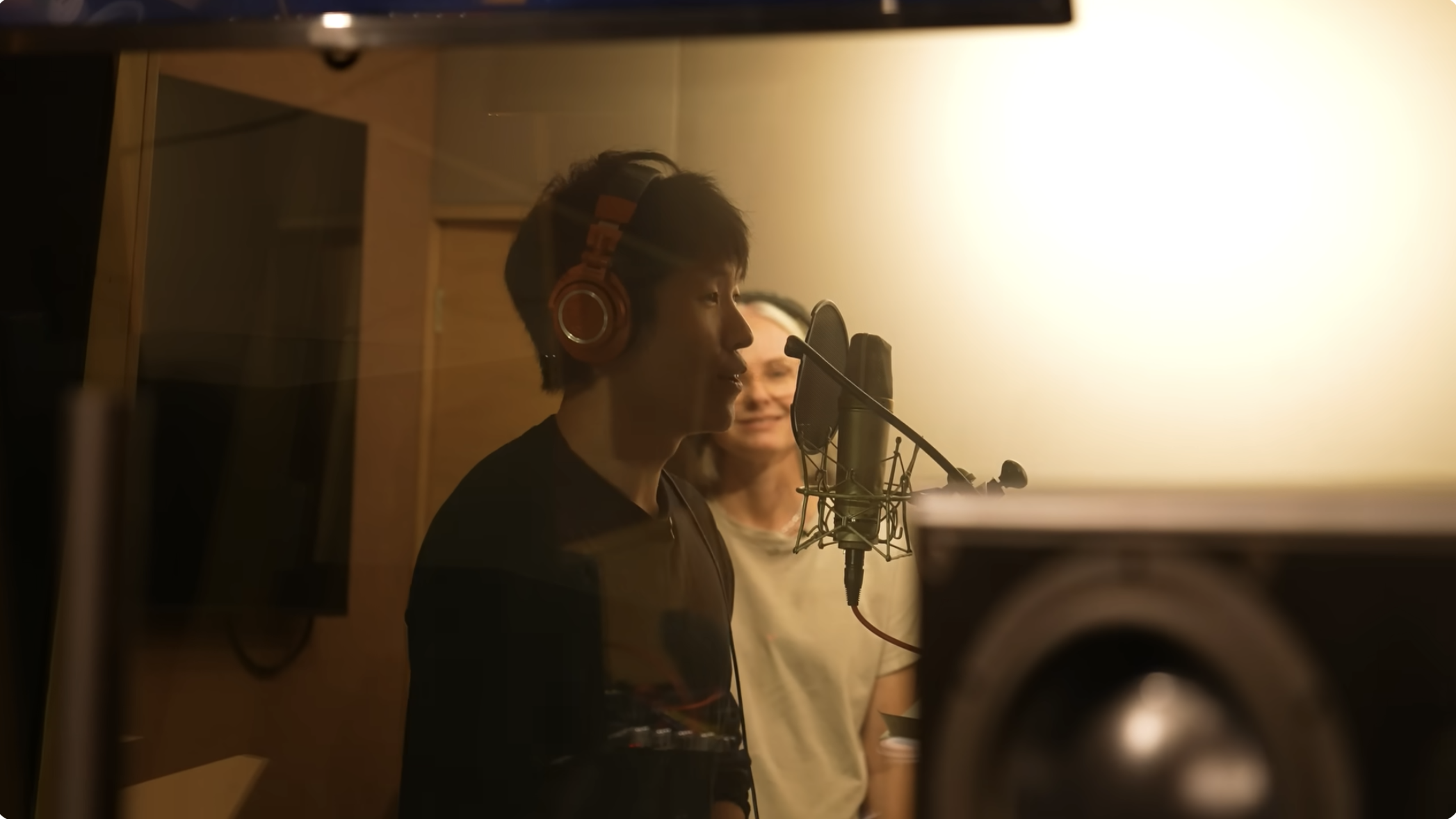
Sometimes the coach’s job is to make the room feel safer
Later, when Jodi — QuarterJade — reacted to the finished video, she talked about what it felt like having me there during the recording sessions.
She said:
“She was just genuinely lovely, so good at what she does, but also so encouraging... she was just such a really warm energy.”
What I especially appreciated was that she said this while also acknowledging how uncomfortable the whole experience felt for most of them.
They were doing something unfamiliar. They were singing into a studio microphone, hearing themselves back, and trying to perform songs when most of them didn’t identify as singers in the first place.
At one point, Jodi even said having me there “felt like my mom.”
I’ll take it.
Because especially in a recording session, part of my job is technical: listening, diagnosing, and helping someone make an adjustment when something isn’t working.
But another part is being the person in the room who stays calm.
A missed note doesn’t mean you can’t sing.
A difficult take doesn’t mean all your preparation disappeared.
It just means we figure out what’s happening and try something different.
And when someone is already feeling vulnerable, having a coach there who can say, This is okay. I know what we can try next, can make a very big difference.

What can two voice lessons actually do?
Two lessons aren’t enough time to completely retrain someone’s voice.
But they can still make a meaningful difference.
Sometimes that means changing the way someone is shaping a vowel, creating more space, releasing tension, or adjusting how they’re approaching a higher note.
Sometimes the biggest shift isn’t even a new sound. It’s helping someone understand why something feels difficult, so it stops feeling quite so mysterious.
That’s one of the things I love about good vocal technique.
It gives you information.
Instead of thinking, I’m just bad at this note, you can start asking better questions:
Am I pushing too much?
Am I holding tension somewhere?
Is the vowel making this harder?
Am I trying to make a sound my voice isn’t coordinated for yet?
Once you know what you’re listening and feeling for, you have something you can work with.
And even in a short amount of time, you can start to feel less like you’re guessing and more like you understand what to try next.
Technique should give you more freedom, not more to think about
Ultimately, that’s what I want vocal technique to do.
Not give you twenty more things to worry about while you’re singing.
The opposite.
I want you to understand your voice well enough that you have options.
If something isn’t working, you have an idea why.
If the first approach doesn’t work, you have another one.
And when the preparation is done, you can stop trying to control every note and actually sing the song.
That was probably my favorite part of the OfflineTV project.
Seven very different people stepped into something that was way outside most of their comfort zones. They learned, struggled, laughed, got frustrated, tried again, and eventually walked into the studio and recorded an album.
They didn’t need to become different people to do it.
They just needed enough understanding, preparation, and support to trust themselves a little more when it was time to sing.
And honestly, that’s what I want for every singer I work with.
Want to understand your own voice better?
If you’ve been singing for years but still feel like you’re guessing about why certain notes, sounds, or songs work — and others don’t — private coaching can help you understand what your voice is doing and give you tools you can actually use.
Explore The Unlimited Voice
WAYS TO WORK TOGETHER
Private Voice Coaching
Personalized voice training designed around your voice, your goals, and the songs you want to sing.
Explore Private Coaching →
Studio Membership
Live Studio Classes, replays, vocal exercises, and a supportive community for singers who want to keep learning and growing.
Explore the Studio Membership →
FREE RESOURCES
Cheatsheet for Better Singing →
Free Straw Singing Course →
Join the Newsletter →